Hail in the Bible
 Traditional Legal Model: Hail in the Bible is a means of divine judgment used by God in His anger against sin and rebellion and as a weapon of war.
Biblical Healing Model: Hail is a destructive force of nature that God would normally protect from but, when man is in rebellion, God, at times, having to respect man’s free will, does not restrain it.
Hail in the Bible – Egypt

Where rain is seen as a blessing, hail in the Bible is generally thought of as a destructive force. The best-known example is the seventh plague on Egypt:
“Behold, to morrow about this time I will cause it to rain a very grievous hail, such as hath not been in Egypt since the foundation thereof even until now. Send therefore now, and gather thy cattle, and all that thou hast in the field; for upon every man and beast which shall be found in the field, and shall not be brought home, the hail shall come down upon them, and they shall die.” (Exo 9:18-19)
The usual understanding is that cases of hail in the Bible and other plagues were judgments from God sent by Him with the intent to cause death and destruction as punishment for Pharaoh’s refusal to let Israel go. This website takes the position that God is not a cause of death and that misunderstandings have come in through the translation of the Bible and in other ways.
While God referenced the plagues to induce Pharaoh to repent and humble himself, He did not cause them.
“And Moses and Aaron came in unto Pharaoh, and said unto him, Thus saith the LORD God of the Hebrews, How long wilt thou refuse to humble thyself before me? let my people go, that they may serve me.” (Exo 10:3)
The plagues involved forces of nature – doubtless with Satan’s involvement – that He could not protect Egypt from because of this rejection of Him as God. This was similar to the situation before the flood:
Hast thou marked the old way which wicked men have trodden? Which were cut down out of time, whose foundation was overflown with a flood: Which said unto God, Depart from us: and what can the Almighty do for them?” (Job 22:15-17)
Note that the “cause it to rain” of Exodus 9:18 is in the hiphil verb form which indicates a permissive act on the part of God. https://characterofgod.org/hiphil-verb-form/ This is an important factor to recognize.
Also, it is significant that God wanted Pharaoh to soften his heart, to humble himself:
“As yet exaltest thou thyself against my people, that thou wilt not let them go?” (Exo 9:17)
If God wanted Pharaoh to humble himself then God cannot be the one hardening his heart. That would make no sense.
Also, God warning to protect from harm is inconsistent with Him wanting to harm.
“And the LORD said unto Moses, Stretch forth thine hand toward heaven, that there may be hail in all the land of Egypt, upon man, and upon beast, and upon every herb of the field, throughout the land of Egypt. And Moses stretched forth his rod toward heaven: and the LORD sent thunder and hail, and the fire ran along upon the ground; and the LORD rained hail upon the land of Egypt. So there was hail, and fire mingled with the hail, very grievous, such as there was none like it in all the land of Egypt since it became a nation. And the hail smote throughout all the land of Egypt all that was in the field, both man and beast; and the hail smote every herb of the field, and brake every tree of the field.” (Exo 9:22-25)
In “the LORD sent,” “sent” is the Hebrew word “nathan” which is in the permissive verb form. See What Does God Sent Mean?
And the same is true for “the LORD rained.”
“Only in the land of Goshen, where the children of Israel were, was there no hail.” (Exo 9:26)
Why would there be hail everywhere in Egypt except in the land of Goshen?
“My people will live in peaceful dwelling places, in secure homes, in undisturbed places of rest. Though hail flattens the forest and the city is leveled completely,” (Isa 32:18-19, NIV)
When Pharaoh sinned by refusing God’s request to let Israel go, that sin opened a breach in God’s protection allowing Satan to inflict disaster upon Egypt. God allowed it because He had to honor Pharaoh’s choice to serve other gods but also because it could serve as another (in a series) of appeals to Pharaoh’s conscience.
Israel did not need that appeal as they wanted to leave Egypt and they were still under God’s protection as they had not rebelled against God.
Hail
Hail, in the Bible stories and elsewhere, is formed when the sun produces strong daytime heat causing updrafts that build cumulonimbus clouds. The sustained updrafts can keep hail pellets suspended long enough to grow to a large size. More daytime heat (as in a long day) with the necessary conditions could produce more and larger hail.
Hail in the Bible – Joshua 10
In Joshua 10, the unusually prolonged period of sunlight warming the ground could have produced very large hail.
Chapter 9 is the story of the Gibeonites who made peace with Israel which surrounding nations saw as a betrayal. The kings of 5 nations in the area gathered their armies to attack and punish Gibeon:
“And the men of Gibeon sent unto Joshua to the camp to Gilgal, saying, Slack not thy hand from thy servants; come up to us quickly, and save us, and help us: for all the kings of the Amorites that dwell in the mountains are gathered together against us. So Joshua ascended from Gilgal, he, and all the people of war with him, and all the mighty men of valour. And the LORD said unto Joshua, Fear them not: for I have delivered them into thine hand; there shall not a man of them stand before thee. Joshua therefore came unto them suddenly, and went up from Gilgal all night.” (Josh 10:6-9)
So, it sounds like first thing in the morning (early in the day) the attack was launched.
“thine hand” – Israel’s hand
All God has done so far is to deliver the kings of the Amorites and their armies into the hand of Israel. That indicates simply that they are no longer under God’s protection and therefore are subject to whatever Israel is going to do to them. Next, we begin to read of God’s involvement.
“And the LORD discomfited them before Israel, and slew them with a great slaughter at Gibeon, and chased them along the way that goeth up to Bethhoron, and smote them to Azekah, and unto Makkedah.” (Josh 10:10)
See a study of the word “discomfited.” It does not necessarily mean to destroy.
Discomfited = haman, H2000
AV-discomfit 5, destroy 3, vex 1, crush 1, break 1, consume 1 trouble 1; 13
1) to move noisily, confuse, make a noise, discomfit, break, consume, crush, destroy, trouble, vex
1a) (Qal)
1a1) to move noisily
1a2) to confuse, discomfit, vex
“I will send my fear before thee, and will destroy (“haman”) all the people to whom thou shalt come, and I will make all thine enemies turn their backs unto thee.” (Exo 23:27)
People don’t turn their backs and run if they are destroyed. David, describing how God protected him from his enemies, said:
“The LORD thundered from heaven, and the most High uttered his voice. And he sent out arrows, and scattered them; lightning, and discomfited them.” (2 Sam 22:14-15)
“And I will send hornets before thee, which shall drive out the Hivite, the Canaanite, and the Hittite, from before thee.” (Exo 23:28)
“Slew” and “smote” in Joshua 10:10 are both from “nakah” (H5221) and are both in the hiphil (permissive) verb form.
“And it came to pass, as they fled from before Israel, and were in the going down to Bethhoron, that the LORD cast down great stones from heaven upon them unto Azekah, and they died: they were more which died with hailstones than they whom the children of Israel slew with the sword.” (Joshua 10:11)

The “slew” in verse 11 is from a different Hebrew word than in verse 10. In verse 11, it is definitely speaking of the actions of the Israelite army actively killing with the sword. In verse 10, being in the hiphil verb form, it is to permit to be killed or to not protect.
“cast down” = shalach (H7993) in the hiphil verb form
“Then spake Joshua to the LORD in the day when the LORD delivered up the Amorites before the children of Israel, and he said in the sight of Israel, Sun, stand thou still upon Gibeon; and thou, Moon, in the valley of Ajalon.” (Josh 10:12)
“delivered up” = nathan, again, a permissive word. See a description of the permissive words “shalach” and “nathan.”
Many versions, instead of “then,” have “on the day.” So, it is not necessary that Joshua said this after verse 11. It would not make sense – they are all dead. The word translated as “then” does not have to indicate an order of events.
“then”
H227 אָז ‘az awz
a demonstrative adv; adv;
AV-beginning, even, for, from, hitherto, now, old, since, then, time, when, yet; 22
1) then, at that time
1a) temporal expressions
1a1) then (past)
1a2) then, if … then (future)
1a3) earlier
1b) logical expressions
1b1) in that case
1b2) that (being so)
“And the sun stood still, and the moon stayed, until the people had avenged themselves upon their enemies. Is not this written in the book of Jasher? So the sun stood still in the midst of heaven, and hasted not to go down about a whole day.” (Josh 10:13)
Notice: “avenged themselves.” It was their vengeance, not God’s.
“About a whole day” We don’t know how long that time period was. It would have been until the sun went down, however long that was on that day.
“And there was no day like that before it or after it, that the LORD hearkened unto the voice of a man: for the LORD fought for Israel.” (Josh 10:14)
“And Joshua returned, and all Israel with him, unto the camp to Gilgal. But these five kings fled, and hid themselves in a cave at Makkedah. And it was told Joshua, saying, The five kings are found hid in a cave at Makkedah. And Joshua said, Roll great stones upon the mouth of the cave, and set men by it for to keep them:” (Josh 10:15-18)
“And stay ye not, but pursue after your enemies, and smite the hindmost of them; suffer them not to enter into their cities: for the LORD your God hath delivered them into your hand. And it came to pass, when Joshua and the children of Israel had made an end of slaying them with a very great slaughter, till they were consumed, that the rest which remained of them entered into fenced cities.” (Josh 10:19-20)
The rest of the chapter goes on to describe the various cities that Joshua attacked and defeated.
Hail in the Bible – Other Factors
We don’t understand everything to do with hail in the Bible. Here are some other factors that might affect the meaning.
Accommodation – Beyond simply allowing it, God was accommodating free will by allowing Joshua and Israel to do what they did because He always honors free will.
Natural Consequences – There was also the effect, from the side of the armies that were destroyed, of their experiencing the natural result (live by the sword – die by the sword) of their actions – in effect, a natural punishment.)
A Plea to the Conscience – Used to plead with conscience
“Judgment also will I lay to the line, and righteousness to the plummet: and the hail shall sweep away the refuge of lies, and the waters shall overflow the hiding place.” (Isa 28:17)
Some of the uses may be of literal hailstones but “sent” (or allowed) as a wake-up call, an appeal to the conscience.
The suggestion is that hailstones, fire and brimstones are forms of pleading.
“I smote you with blasting and with mildew and with hail in all the labours of your hands; yet ye turned not to me, saith the LORD.” (Hagg 2:17)
Doesn’t “yet ye turned not to me” suggest a connection to an appeal to the conscience?
Did God clobber them (smote) with hail etc and then expect them to turn to Him? Does that even make sense?
How about God allowed the hail and, in allowing it, used that event to prick their consciences (smote) and urge them to repent. And – we don’t know – perhaps some did.
“And I will plead against him with pestilence and with blood; and I will rain upon him, and upon his bands, and upon the many people that are with him, an overflowing rain, and great hailstones (H417), fire, and brimstone.” (Eze 38:22)
The account of King Herod (Acts chapter 12) being smitten is interesting in that it also could have been a call to repentance. https://characterofgod.org/death-of-king-herod/
Let Us do This
The meaning of “stand thou still” is interesting:
“Stand thou still”
H1826 דָּמַם damam daw-man’
a prim root
AV-silence 6, still 6, silent 4, cut off 3, cut down 2, rest 2, cease 2, forbear 1, peace 1, quieted 1, tarry 1, wait 1; 30
1) to be silent, be still, wait, be dumb, grow dumb
1a) (Qal)
1a1) to be silent
1a2) to be still, die
1a3) to be struck dumb
1b) (Niphal) to be silenced, be made silent, destroyed
1c) (Poal) to make quiet
1d) (Hiphil) to make silent (cause to die)
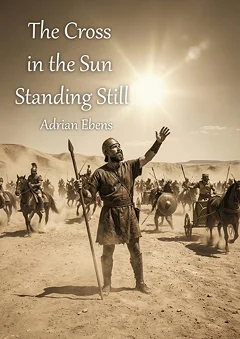
Here is an interesting thought; could it be that Joshua was saying to the Son of God “be silent” or, in effect, “don’t tell me what to do or not do.” Essentially, I will deal with my enemies in my own way – with the sword.
The Son of God is compared or symbolized at times by the sun:
“But unto you that fear my name shall the Sun of righteousness arise with healing in his wings; and ye shall go forth, and grow up as calves of the stall.” (Malachi 4:2)
“And the city had no need of the sun, neither of the moon, to shine in it: for the glory of God did lighten it, and the Lamb is the light thereof.” (Revelation 21:23)
This is described in more detail in this booklet from Maranatha Media https://maranathamedia.com/book/view/the-cross-in-the-sun-standing-still
Hail in the Bible – Summary
There are other cases of hail in the Bible often ascribed to vengeful acts of God. Most notably in Revelation:
“And there fell upon men a great hail out of heaven, every stone about the weight of a talent: and men blasphemed God because of the plague of the hail; for the plague thereof was exceeding great.” (Rev 16:21)
But that is associated with “the fierceness of his wrath” (https://characterofgod.org/gods-wrath-in-the-bible/) which is correctly understood as Him honoring man’s choice to reject Him (He will not force man’s free will) and leaving man to the natural results of his choices.
Hail and other harmful events will, in the end, be rightly understood not as God lashing out to harm but the natural result of mankind rejecting God’s protection.
Watch the video of a group Bible study on Hail in the Bible:
Return from Hail in the Bible to the Character of God and the Gospel Glossary
