Cleansing of the Sanctuary
The Cleansing of the Sanctuary
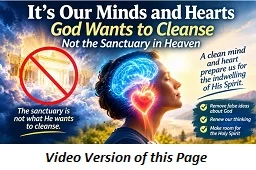 Introduction
In this study of the cleansing of the sanctuary, we are going to look at:
- God’s dwelling place is a temple
- We are the temple of God
- Therefore, God wants to dwell in us
- Therefore, our temple must be cleansed
- How our temple is cleansed
And we will start looking at those points in relation to this verse:
“And he said unto me, Unto two thousand and three hundred days; then shall the sanctuary be cleansed.” (Daniel 8:14)
The major questions we want to understand about that verse are:
-
- What sanctuary is being referred to?
- When is the cleansing to happen?
- What is the nature of that cleansing?
God Lives in a Sanctuary, Tabernacle, Tent, House, Temple
First, let’s see what the Bible says about God living in a sanctuary.
“And let them make me a sanctuary; that I may dwell among them. According to all that I shew thee, after the pattern of the tabernacle, and the pattern of all the instruments thereof, even so shall ye make it.” (Exodus 25:8-9)
“sanctuary”
H4720 מִקְדָּשׁ miqdash mik-dawsh’ or
מקדשׁ miqqëdash (Ex 15:17) mik-ked-awsh’
from H6942; n m;
AV-sanctuary 69, holy place 3, chapel 1, hallowed part 1; 74
1) sacred place, sanctuary, holy place
1a) sanctuary
1a1) of the temple
1a2) of the tabernacle
1a3) of Ezekiel’s temple
1a4) of Jehovah
The definitions do not include a “dwelling” but that is implied in the verse.
The sanctuary they were to build was after the pattern of the tabernacle.
“tabernacle”
H4908 מִשְׁכָּן mishkan mish-kawn’
from H7931; n m;
AV-tabernacle 119, dwelling 9, habitation 5, dwellingplaces 3, place 1, dwelleth 1, tents 1; 139
1) dwelling place, tabernacle
1a) dwelling-place
1b) dwellings
“And thou shalt make an hanging for the door of the tent, of blue, and purple, and scarlet, and fine twined linen, wrought with needlework.” (Exodus 26:36)
This “tent” was the sanctuary Israel built in the wilderness.
“tent”
H168 אֹהֶל ‘ohel o’-hel
From H166; n m;
AV-tabernacle(s) 198, tent(s) 141, dwelling 2, place(s) 2, covering 1, home 1; 345
1) tent
1a) nomad’s tent, and thus symbolic of wilderness life, transience
1b) dwelling, home, habitation
1c) the sacred tent of Jehovah (the tabernacle)
“And it came to pass in the four hundred and eightieth year after the children of Israel were come out of the land of Egypt, in the fourth year of Solomon’s reign over Israel, in the month Zif, which is the second month, that he began to build the house of the LORD.” (1 Kings 6:1)
“house”
H1004 בּיִת bayith bah’-yith
probably from H1129 abbreviated; n m;
AV-house 1881, household 54, home 25, within 22, temple 11, prison 16, place 16, family 3, families + 01 2, dungeon 2, misc 23; 2055
1) house
1a) house, dwelling habitation
1b) shelter or abode of animals
1c) human bodies (fig.)
1d) of heaven or hell
1e) of abode of light and darkness
1f) of land of Ephraim
2) place
3) receptacle
4) home, house as containing a family
5) household, family
5a) those belonging to the same household
5b) family of descendants, descendants as organized body
6) household affairs
“The LORD is in his holy temple, the LORD’S throne is in heaven: his eyes behold, his eyelids try, the children of men.” (Psalms 11:4)
“temple”
H1964 הֵיכָל heykal hay-kawl’
probably from H3201 (in the sense of capacity); n m;
AV-temple 70, palace 10; 80
1) palace, temple, nave, sanctuary
1a) palace
1b) temple (palace of God as king)
1c) hall, nave (of Ezekiel’s temple)
1d) temple (of heavenly temple)
This could be understood as the specific place of His administration within His dwelling place. The place where His throne is.
Sanctuary Tabernacle Tent House Temple
And, of course, we think of God’s place as heaven:
“After this manner therefore pray ye: Our Father which art in heaven, Hallowed be thy name.” (Matthew 6:9)
“Your/my/our Father which is/art in heaven? occurs 17 times.
God’s home is in heaven and we understand that there is a work going on there.
That work, a priestly work (meaning intercession) is carried on by His Son as described in Hebrews chapter 8.
Hebrews 8
Jesus, our intercessor, is doing a priestly work which certainly involves cleansing. This chapter describes His ministry and its result.
“Now of the things which we have spoken this is the sum: We have such an high priest, who is set on the right hand of the throne of the Majesty in the heavens;” (Hebrews 8:1)
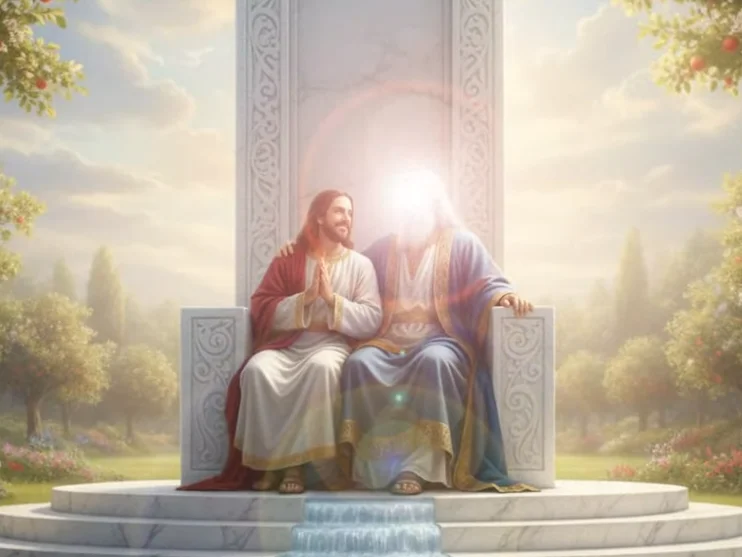
This is talking about Jesus Who is:
“A minister of the sanctuary, and of the true tabernacle, which the Lord pitched, and not man.” (Hebrews 8:2)
The verse does not actually say what the true tabernacle is but we have a clue. It was pitched by the Lord, not by man so it is not a man-made structure.
“pitched”
G4078 πήγνυμι pegnumi payg’-noo-mee
a prolonged form of a primary verb (which in its simpler form occurs only as an alternate in certain tenses); v;
AV-pitch 1; 1
1) to make fast, to fix
2) to fasten together, to build by fastening together
The Old Testament Sanctuary was a Teaching Tool
We recognize that the Old Testament sanctuary was meant to teach a greater reality. Essentially, it was an acted representation or we could liken it to theater, with:
- A playwright – God Himself
- A producer – Jesus
- A director – Moses
- A script – scripture, especially Exodus to Deuteronomy
- A lead actor – the high priest
- Supporting actors – the priests
- Stagehands – the Levites
- Costumes – the priestly robes
- Props – the sanctuary furniture
- Curtains – to separate the scenes
- A live audience – the Israelites
And, while it is no longer playing live, up to this day we still have:
- Professional theater critics – theologians
- Readers of the play’s script – us
This is not “theater” in a demeaning sense (like “it’s all just an act”) but as a teaching tool. In New Testament, times this was continued:
“For I think that God hath set forth us the apostles last, as it were appointed to death: for we are made a spectacle unto the world, and to angels, and to men.” (1 Corinthians 4:9)
The word “spectacle” is from the Greek word “theatron.” Its other two uses (Acts 19:29, 31) are translated as “theatre.”
“For every high priest is ordained to offer gifts and sacrifices: wherefore it is of necessity that this man have somewhat also to offer.” (Hebrews 8:3)
With Jesus being the high priest, by definition, “it is of necessity” that He have something to offer.
“And walk in love, as Christ also hath loved us, and hath given himself for us an offering and a sacrifice to God for a sweetsmelling savour.” (Ephesians 5:2)
“For if he were on earth, he should not be a priest, seeing that there are priests that offer gifts according to the law: Who serve unto the example and shadow of heavenly things, as Moses was admonished of God when he was about to make the tabernacle: for, See, saith he, that thou make all things according to the pattern shewed to thee in the mount.” (Hebrews 8:4-5)
Priests on earth and what they did was a foreshadowing of the ministry of Christ in heaven. If He was on earth, He would not be a priest because priests on earth offer gifts according to the law (Greek: nomos). Also, He “should not be a priest” – because He was not of the tribe of Levi.
“But now hath he obtained a more excellent ministry, by how much also he is the mediator of a better covenant, which was established upon better promises.” (Hebrews 8:6)
So, there are differences in the ministry and the sacrifices involved and the earthly teaches about the heavenly but they are different. Moses, when he was in the mount, was shown a pattern (blueprint) of what to build, not the original in heaven.
This excellent ministry was based on God’s promises which were better than those man made in the covenant at Sinai:
- People: “… all that the LORD has spoken, ‘we will do’ …” (Exodus 19:8)
- God: essentially “I (have done and) will do …” (Exodus 19:4 and other verses)
“For if that first covenant had been faultless, then should no place have been sought for the second. For finding fault with them, he saith, Behold, the days come, saith the Lord, when I will make a new covenant with the house of Israel and with the house of Judah:” (Hebrews 8:7-8)
The fault with the first covenant (agreement) was on the side of the people with their poor promises and inability/unwillingness to carry them out. See
https://characterofgod.org/covenant-definition/ for more about the covenant agreement.
“Not according to the covenant that I made with their fathers in the day when I took them by the hand to lead them out of the land of Egypt; because they continued not in my covenant, and I regarded them not, saith the Lord. For this is the covenant that I will make with the house of Israel after those days, saith the Lord; I will put my laws into their mind, and write them in their hearts: and I will be to them a God, and they shall be to me a people:” (Hebrews 8:9-10)
Verse 10 is quoted from Jeremiah 31:33.
Putting His law in their minds can be seen as putting a knowledge of Himself and His ways in their minds:
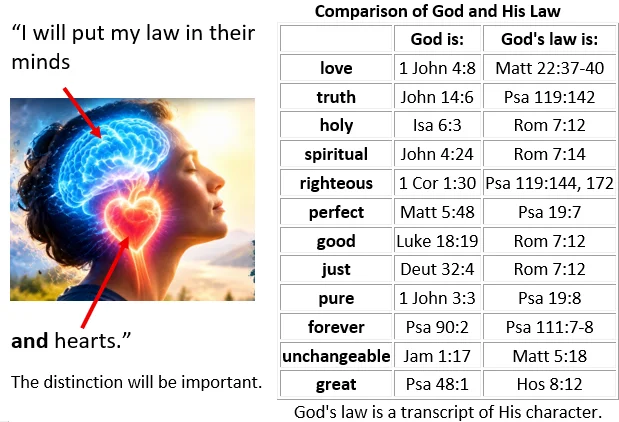
That a knowledge of Him is a part of this (even the goal) is confirmed by the next verse:
“And they shall not teach every man his neighbour, and every man his brother, saying, Know the Lord: for all shall know me, from the least to the greatest.” (Hebrews 8:11)
And, of course, this verse:
“And this is life eternal, that they might know thee the only true God, and Jesus Christ, whom thou hast sent.” (John 17:3)
Our heavenly high priest is ministering by:
- Putting His laws into our minds
- Writing His laws in our hearts
- So that we can know Him
We could say: Now of the things in Hebrews 8:1-10, this is the sum:
Jesus, our high priest in heaven, is working to write His law in our minds and hearts so that, by correctly understanding His law we can know Him.
We will come to the distinction between minds and hearts in part 2 of this study.
Here are some other write-my-law-in-hearts verses:
“This is the covenant that I will make with them after those days, saith the Lord, I will put my laws into their hearts, and in their minds will I write them;” (Hebrews 10:16)
“But this shall be the covenant that I will make with the house of Israel; After those days, saith the LORD, I will put my law in their inward parts, and write it in their hearts; and will be their God, and they shall be my people.” (Jeremiah 31:33)
“And I will give them an heart to know me, that I am the LORD: and they shall be my people, and I will be their God: for they shall return unto me with their whole heart.” (Jeremiah 24:7)
See more on God’s law:
https://characterofgod.org/biblical-law/
https://characterofgod.org/supplemental-bible-glossary-terms/#design-natural-law
https://characterofgod.org/supplemental-bible-glossary-terms/#imposed-law
As we look further at the law in relation to the cleansing of the sanctuary, we will consider not so much what the laws but rather how they function:
- purpose of the law
- awareness of the law
- recording
- enforcement
- consequences
- benefits
The normal idea of the cleansing of the sanctuary is that Jesus is cleansing the records of sins. The evidence against this includes:
God (love, agape) keeps no record of sins:
“It does not dishonor others, it is not self-seeking, it is not easily angered, it keeps no record of wrongs.” (1 Corinthians 13:5, NIV)
- God is ever-merciful, He freely forgives:
“And you, being dead in your sins and the uncircumcision of your flesh, hath he quickened together with him, having forgiven you all trespasses;” (Colossians 2:13)
- No sacrifices desired or needed:
“Sacrifice and offering thou didst not desire; mine ears hast thou opened: burnt offering and sin offering hast thou not required.” (Psalms 40:6)
- Divine Justice is to do the just or right thing which is to give mercy:
https://characterofgod.org/gods-justice-in-the-bible/
I have used the following before as an illustration that “there will be no record of sins” does not make sense:
“So when Uriah the Hittite gets to heaven and meets Solomon and Solomon starts telling Uriah that his parents were David and Bathsheba he has to say of parts of the story “sorry I don’t remember what happened there and no one else does either.”
Will we have the Bible in heaven but with all references to actual sins redacted out of it? It would be a much thinner Bible.
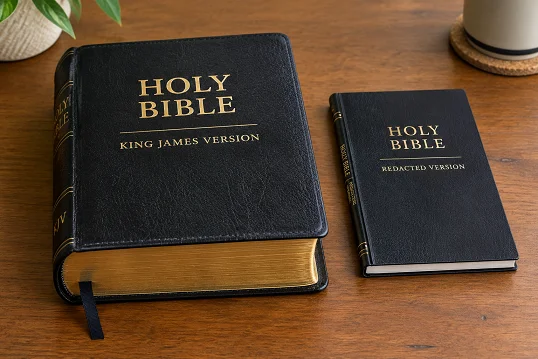
God is about erasing sinful tendencies and desires from the human heart not about erasing the mere record of them. The record (memory) is there but not in the sense of a ledger of sins that must be paid for.
We are the Temple of God
Consider what the Bible says about the identity of God’s temple:
“Know ye not that ye are the temple of God, and that the Spirit of God dwelleth in you?” (1 Corinthians 3:16)
“What? know ye not that your body is the temple of the Holy Ghost which is in you, which ye have of God, and ye are not your own?” (1 Corinthians 6:19)
“Now therefore ye are no more strangers and foreigners, but fellowcitizens with the saints, and of the household of God; And are built upon the foundation of the apostles and prophets, Jesus Christ himself being the chief corner stone; In whom all the building fitly framed together groweth unto an holy temple in the Lord: In whom ye also are builded together for an habitation of God through the Spirit.” (Ephesians 2:19-22)
“Ye also, as lively stones, are built up a spiritual house, an holy priesthood, to offer up spiritual sacrifices, acceptable to God by Jesus Christ.” (1 Peter 2:5)
Those verses and others indicate that God’s people make up His temple.
God Wants to Dwell with/among His People
In their travels in the wilderness God proposed to live “among” them and directed the building of the sanctuary to show that:
“And let them make me a sanctuary; that I may dwell among them.” (Exodus 25:8)
“And I will dwell among the children of Israel, and will be their God. And they shall know that I am the LORD their God, that brought them forth out of the land of Egypt, that I may dwell among them: I am the LORD their God.” (Exodus 29:45-46)
“And I will set my tabernacle among you: and my soul shall not abhor you. And I will walk among you, and will be your God, and ye shall be my people.” (Leviticus 26:11-12)
“Moreover I will make a covenant of peace with them; it shall be an everlasting covenant with them: and I will place them, and multiply them, and will set my sanctuary in the midst of them for evermore. My tabernacle also shall be with them: yea, I will be their God, and they shall be my people.” (Ezekiel 37:26-27)
“Jesus answered and said unto him, If a man love me, he will keep my words: and my Father will love him, and we will come unto him, and make our abode with him.” (John 14:23)
We can add the word “abode.”
God Wants to Dwell in His People
More than just “among,” God wants to dwell in His people:
“He that eateth my flesh, and drinketh my blood, dwelleth in me, and I in him.” (John 6:56)
“And I will pray the Father, and he shall give you another Comforter, that he may abide with you for ever; Even the Spirit of truth; whom the world cannot receive, because it seeth him not, neither knoweth him: but ye know him; for he dwelleth with you, and shall be in you.” (John 14:16–17)
“For we are labourers together with God: ye are God’s husbandry, ye are God’s building.” (1 Corinthians 3:9)
“For ye are the temple of the living God; as God hath said, I will dwell in them, and walk in them; and I will be their God, and they shall be my people.” (2 Corinthians 6:16)
Dwell in His People in What Sense?
“But will God indeed dwell on the earth? behold, the heaven and heaven of heavens cannot contain thee; how much less this house that I have builded?” (1 Kings 8:27)
If the universe cannot contain God, we (our bodies) certainly can’t. But it is not talking about physical containment. It is talking about Him being in our minds. But more than just us thinking about Him. “I have God in mind; I am thinking of Him” is not what we are talking about. It will be a spiritual connection involving direct, continual thought (non-verbal) communication with God.
God wants to do more than dwell with/among (in close proximity) to His people. He wants to dwell in His people. This is not some kind of parasitism. This indwelling will involve a degree of close communication and direction.
“In all thy ways acknowledge him, and he shall direct thy paths.” (Proverbs 3:6)
“I will instruct thee and teach thee in the way which thou shalt go: I will guide thee with mine eye.” (Psalms 32:8)
“And thine ears shall hear a word behind thee, saying, This is the way, walk ye in it, when ye turn to the right hand, and when ye turn to the left.” (Isaiah 30:21)
“For who hath known the mind of the Lord, that he may instruct him? But we have the mind of Christ.” (1 Corinthians 2:16)
Where in Us Will God Dwell?
“That Christ may dwell in your hearts by faith; that ye, being rooted and grounded in love.” (Ephesians 3:17)
In the heart or mind.
“But ye are not in the flesh, but in the Spirit, if so be that the Spirit of God dwell in you. Now if any man have not the Spirit of Christ, he is none of his. And if Christ be in you, the body is dead because of sin; but the Spirit is life because of righteousness. But if the Spirit of him that raised up Jesus from the dead dwell in you, he that raised up Christ from the dead shall also quicken your mortal bodies by his Spirit that dwelleth in you.” (Romans 8:9–11)
Who raised Jesus from the dead? – His Father as evidenced by Romans 10:9 and many others.
It is the Spirit of the Father that dwells in the believer. John 14:23 quoted earlier shows that both Father and Son dwell in the believer, by their Spirit:
“… we will come unto him, and make our abode with him.” (John 14:23)
“If we love one another, God dwelleth in us, and his love is perfected in us. Hereby know we that we dwell in him, and he in us, because he hath given us of his Spirit.” (1 John 4:12–13)
“… God is love; and he that dwelleth in love dwelleth in God, and God in him.” (1 John 4:16)
God’s purpose is not merely to occupy a place within us, but to reproduce His loving character in our lives.
God’s ultimate desire is to live with humanity forever

“… Behold, the tabernacle of God is with men, and he will dwell with them, and they shall be his people, and God himself shall be with them, and be their God.” (Revelation 21:3)
“Sing and rejoice, O daughter of Zion: for, lo, I come, and I will dwell in the midst of thee, saith the LORD.” (Zechariah 2:10)
“For the LORD hath chosen Zion; he hath desired it for his habitation. This is my rest for ever: here will I dwell; for I have desired it.” (Psalm 132:13–14)
If God desires to dwell in us, doesn’t that tell us that He wants a very close, loving fellowship with Him?
God Likes to Have a Clean House
“And there shall in no wise enter into it any thing that defileth, neither whatsoever worketh abomination, or maketh a lie: but they which are written in the Lamb’s book of life.” (Revelation 21:27)
“Who shall ascend into the hill of the LORD? or who shall stand in his holy place? He that hath clean hands, and a pure heart; who hath not lifted up his soul unto vanity, nor sworn deceitfully.” (Psalm 24:3–4)
“Know ye not that ye are the temple of God, and that the Spirit of God dwelleth in you? If any man defile the temple of God, him shall God destroy; for the temple of God is holy, which temple ye are.” (1 Corinthians 3:16–17)
“Wherefore come out from among them, and be ye separate, saith the Lord, and touch not the unclean thing; and I will receive you.” (2 Corinthians 6:17)
If a person has touched the unclean thing it doesn’t sound like God would dwell with him.
“For such an high priest became us, who is holy, harmless, undefiled, separate from sinners, and made higher than the heavens;” (Hebrews 7:26)
Cleanliness before meeting with God is important. Think of the expression “cleanliness is next to godliness.” But more important is to have a pure heart.
“Draw nigh to God, and he will draw nigh to you. Cleanse your hands, ye sinners; and purify your hearts, ye double minded.” (James 4:8)
That verse refers to both physical and spiritual cleanliness.
“And the LORD said unto Moses, Go unto the people, and sanctify them to day and to morrow, and let them wash their clothes, And be ready against the third day: for the third day the LORD will come down in the sight of all the people upon mount Sinai.” (Exodus 19:10-11)
Note: Exodus is talking about the timing of Pentecost:
Pentecost was 50 days inclusive (and therefore on the same day of the week) from the wave sheaf day which marks the resurrection. Biblical evidence, when carefully examined, shows that the resurrection was on a seventh-day Sabbath, not a Sunday. (https://jesus-resurrection.com/)
The Cleansing of the Sanctuary – When?
We will look at three lines of evidence:
- Prophecies in Daniel
- Jesus’ Temple Cleansing
- William Miller
- Prophecies in Daniel
Our first text will help answer “when?”
“And he said unto me, Unto two thousand and three hundred days; then shall the sanctuary be cleansed.” (Daniel 8:14)
Those 2300 days represent 2300 prophetic years after which the sanctuary cleansing would begin. Note that the Hebrew word for “cleansed” can indicate a process that continues as in “cleansing to be cleansed” – the beginning of an ongoing process. And this is interesting:
“From the Heb. sadaq, ‘to be just,’ ‘to be righteous.’ The verb occurs in the form here found (niphal) only this once in the OT, which may suggest that a specialized meaning of the term is indicated. Lexicographers and translators suggest various meanings, such as ‘be put right,’ or ‘be put in a rightful condition,’ ‘be righted,’ ‘be declared right,’ ‘be justified,’ ‘be vindicated.’ . . . Thus the Heb. sadaq may convey the additional thought that God’s character will be fully vindicated as the climax to ‘the hour of his judgment’ (Rev. 14:7), which began in 1844.” (SDA Bible Commentary 4:844-845)
The beginning of the 2300 years is given by this verse:
“Know therefore and understand, that from the going forth of the commandment to restore and to build Jerusalem unto the Messiah the Prince shall be seven weeks, and threescore and two weeks: the street shall be built again, and the wall, even in troublous times.” (Daniel 9:25)
More detail for this will be given in part 2 of this study on the cleansing of the sanctuary. The main points are:
The command to rebuild was given in 457 BC. Going forward from 457 BC another 2300 years brings us to 1844 AD
457 BC represented as -457
-457 + 2300 = 1843
Adding 1 year due to there being no year 0 gives us 1844
It is very interesting that 2300 years = 46 Jubilee cycles x 50 years per Jubilee cycle. So, the sanctuary would be cleansed after a period of 46 Jubilees.
- Jesus’ First Temple Cleansing
The Bible leaves a clue in the story of Jesus cleansing the temple:
“And the Jews’ passover was at hand, and Jesus went up to Jerusalem, And found in the temple those that sold oxen and sheep and doves, and the changers of money sitting: And when he had made a scourge of small cords, he drove them all out of the temple, and the sheep, and the oxen; and poured out the changers’ money, and overthrew the tables; And said unto them that sold doves, Take these things hence; make not my Father’s house an house of merchandise. And his disciples remembered that it was written, The zeal of thine house hath eaten me up. Then answered the Jews and said unto him, What sign shewest thou unto us, seeing that thou doest these things? Jesus answered and said unto them, Destroy this temple, and in three days I will raise it up. Then said the Jews, Forty and six years was this temple in building, and wilt thou rear it up in three days?” (John 2:13-20)
Herod’s temple took 46 years to build and then Jesus cleansed it. One commentator made a connection between that event and what we will consider later:
“In cleansing the temple from the world’s buyers and sellers, Jesus announced His mission to cleanse the heart from the defilement of sin.” (The Desire of Ages, p161)
SIDENOTE: This page https://characterofgod.org/john-2-19-meaning/ helps to explain the meaning of the very-misunderstood verse 19 (“destroy this temple”).
The point of interest here is that there was a 46-year building period followed by a cleansing.
- William Miller
The year 1798 AD, by some, is considered to be the beginning of the time of the end. Historical events in Europe and the Middle East described in Daniel 11:40 (which does locate those events at the time of the end) did happen in 1798 but that is another study. However, something interesting happened in North America in that same year.
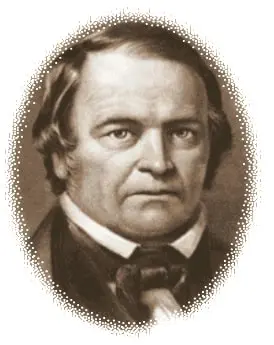
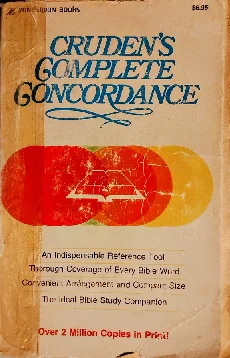
| William Miller was born in Massachusetts on February 15, 1782. On his 16th birthday, February 15, 1798, he reportedly received a Cruden’s Concordance. Here is a detail from the memoirs of William Miller written by advent pioneer Sylvester Bliss:
“We were interested in seeing his old family Bible which cost $18.50 and his copy of Cruden’s Concordance which was originally purchased in 1798 for $8.” |
 |
| In the 1700s books were very, very expensive. A person made maybe 50 cents in a day. So those were highly-valued items.
Cruden’s Concordance was written by Alexander Cruden (1699-1770) and published in 1737. This image is my copy – note the price on the cover – $6.95. |
 |
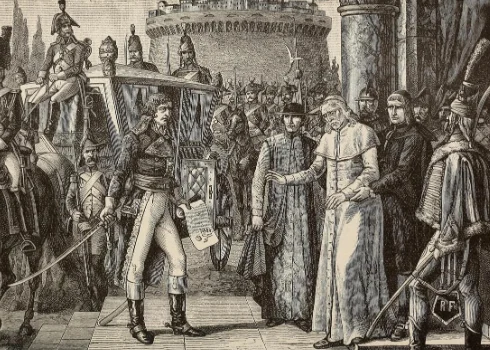
On that same date (February 15, 1798) Pope Pius VI was taken captive by the French general Berthier. Thus, the papacy received a “deadly wound” (Revelation 13:3) ending the long centuries of papal persecution.
There is a sense in which the true sanctuary began to be cleansed in 1844 after 46 years of “building” in preparation for that process. A large part of that preparation came from the studies of William Miller and his resulting 14 rules for Bible study. https://characterofgod.org/william-millers-rules/
That groundwork enabled those who diligently studied, using his sound methods of Bible interpretation, to understand what the true sanctuary was.
The sanctuary to be cleansed was not the earth (which will be cleansed after the millennium – Revelation 21) as people, including William Miller believed, but the true sanctuary, the sanctuary God has always been most concerned about cleansing is the sanctuary He wants to inhabit.
In part 2 of this study (to be presented in our Zoom group study), we will:
- See more detail to establish the date 1844.
- Look at the topic of the records in heaven.
- Mostly, we will look at the Cleansing of the True Sanctuary and how that happens. That will include distinguishing between the mind and heart mentioned in Hebrews 8:10:
“I will put my laws into their mind, and write them in their hearts”
Watch the video of a group Bible study on The Cleansing of the True Tabernacle:
Return from Cleansing of the Sanctuary to the Home Page
