Rod of Iron Bible Verses
 Rod of iron Bible verses suggest that God will rule in a very strict fashion. But is that understanding of the meaning of a rod of iron in the Bible justified? We will look at original word meanings to understand it better.
Traditional Legal Model: God will use His rod of iron to rule the nations with absolute authority and strictly enforce His justice upon all. The common idea does not portray a God of tender loving mercy.
Biblical Healing Model: God’s rod of iron can be equated with the sword of His mouth and with his word which is truth. The iron signifies that it is unbreakable and unchangeable not that it is destructive. The word “rule” can have the meaning of to feed or shepherd and is thus used by the Good Shepherd.

understanding of the character of God and the Gospel.
The Common Understanding
rule with a rod of iron
idiom British
: to rule a country, area, group, etc., in a very strict and often cruel way
The dictator ruled (the country) with a rod of iron.
(https://www.merriam-webster.com/dictionary/rule%20with%20a%20rod%20of%20iron)
That is equivalent to “rule with an iron fist.” Here is something about the origin:
Origin of Rule with a rod of iron/with an iron hand
This term comes from Tyndall’s translation of the Bible (1526): “And he shall rule them with a rodde of yron.” It was later transferred to any kind of stern domination, either serious or ironic.
https://www.youridioms.com/en/idiom/rule-someone-or-something-with-a-rod-of-iron
God’s Rod of Iron is the Sword of His Mouth
There are a number of terms that are equivalent.
“But with righteousness shall he judge the poor, and reprove with equity for the meek of the earth: and he shall smite the earth with the rod of his mouth, and with the breath of his lips shall he slay the wicked.” (Isaiah 11:4)
“rod of his mouth” = “breath of his lips”
“By the word of the LORD were the heavens made; and all the host of them by the breath of his mouth.” (Psalms 33:6)
“word of the LORD” = “breath of his mouth”
“For the sin of their mouth and the words of their lips let them even be taken in their pride: and for cursing and lying which they speak.” (Psalms 59:12)
mouth = lips
“And he hath made my mouth like a sharp sword; in the shadow of his hand hath he hid me, and made me a polished shaft; in his quiver hath he hid me;” (Isaiah 49:2)
mouth = sword
“Sanctify them through thy truth: thy word is truth.” (John 17:17)
word = truth
So, we could have this:
rod = breath = word = mouth = lips = sword = truth
What Does the Rod of Iron Mean in the Bible?
Here are two opinions of the meaning of a rod of iron:
“A rod of iron is one that cannot be broken or resisted. It is a sign of unbending, absolute authority. When the Lord Jesus comes from His heavenly throne to occupy an earthly throne, He will “strike down the nations, and he will rule them with a rod of iron” (Revelation 19:15, ESV).” (https://www.gotquestions.org/rule-all-nations-with-a-rod-of-iron.html)
“In the Bible, the “rod of iron” symbolizes authority and power to rule, often associated with divine judgment and correction. It is referenced in passages such as Psalm 2:9 and Revelation 2:27, where it signifies Christ’s reign and the ability to enforce justice.” (https://godsbless.ing/meaning-of-the-rod-of-iron-in-the-bible/)
These reflect the popular but, as we will see, unbiblical understanding.
Rod of Iron Bible Verses in Revelation
There are only four verses that use this phrase. Here are the verses from Revelation from the KJV and The Remedy New Testament. Note that, in each case, it is Jesus Who is doing the ruling.
“And he shall rule (G4165) them with a rod of iron; as the vessels of a potter shall they be broken to shivers: even as I received of my Father.” (Revelation 2:27)
“He will intervene with an unbreakable shepherd’s rod; he will destroy the nation’s ability to coerce and deceive, like iron crushing pottery.’ I will give them the same power to break free as I received from my Father.” (Revelation 2:27, Remedy New Testament)
“And she brought forth a man child, who was to rule (G4165) all nations with a rod of iron: and her child was caught up unto God, and to his throne.” (Revelation 12:5)
“But the dragon failed, and the woman gave birth to a son–a male child Jesus, who would rule the world with a shepherd’s rod of love that cannot be broken — and her child returned to God and stood at the command center of the universe.” (Revelation 12:5, Remedy New Testament)
“And out of his mouth goeth a sharp sword, that with it he should smite the nations: and he shall rule them with a rod of iron: and he treadeth the winepress of the fierceness and wrath of Almighty God.” (Revelation 19:15)
“He struck down the nations with a sharp sword that came out of his mouth, which symbolized the spoken words of truth that destroy everything built on the lies about God. “He will rule them with an unbreakable shepherd’s rod.” He crushes out all lies and selfishness in the winepress of the unrestrained burning rivers of truth and love flowing from God Almighty.” (Revelation 19:15, Remedy New Testament)
How the Rod of Iron Reveals God’s Character
Consider these terms from the verse above (the KJV):
- a sharp sword
- smite the nations
- rule with a rod of iron
- tread the winepress of the fierceness and wrath of Almighty God
From those phrases, what picture of God’s character are people likely to form in their minds? The terms seem to reinforce one another and do not portray a very friendly God.
Yet there is a contradiction. Notice that, in Revelation 12:5, it is “the man child” Who is doing the ruling. Did Jesus ever use a rod of iron when on earth? Is there anything about the character of Jesus that should put doubt in our minds about the normal understanding?
Let’s take a closer look at those four terms.
1. “A sharp sword”
What is the sharp sword?
“For the word of God is quick, and powerful, and sharper than any twoedged sword, piercing even to the dividing asunder of soul and spirit, and of the joints and marrow, and is a discerner of the thoughts and intents of the heart.” (Hebrews 4:12)
A sharp sword associated with Jesus is obviously metaphorical (“out of His mouth”) and in line with the verse above.
See https://characterofgod.org and https://characterofgod.org/matthew-10-34-meaning/ for more on the meaning and use of a sword.
2. “Smite the nations”
To smite has meanings other than to strike with a blow. Often when God is said to smite it is by withdrawing His protection as the smote definition shows.
Smiting can be verbal or to get attention as in when the angel “smote Peter on the side” (Acts 12:7) to wake him up and get out of prison.
3. “Rule with a rod of iron”
“Rule” is from the Greek word (poimaino) which has the meaning of “shepherding” in the sense of “feeding”; and the phrase could be translated “He shall feed them” or even as “He shall shepherd them.”
Rule G4165 ποιμαίνω poimaino poy-mah’-ee-no
from G4166; v;
AV-feed 6, rule 4, feed cattle 1; 11
1) to feed, to tend a flock, keep sheep
1a) to rule, govern
1a1) of rulers
1a2) to furnish pasture for food
1a3) to nourish
1a4) to cherish one’s body, to serve the body
1a5) to supply the requisites for the soul’s need
 The noun (“poimen” G4166) that the verb “poimaino” is associated with, is used in these verses:
“I am the good shepherd, and know my sheep, and am known of mine.” (John 10:14)
“I am the good shepherd: the good shepherd giveth his life for the sheep.” (John 10:11)
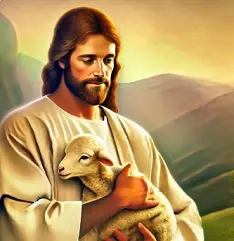
Jesus gives His life; He doesn’t kill His enemies. How does He deal with the lost sheep? He “rules” in the sense of caring for them and for others, not for His own benefit.
Other uses of poimaino G4165 (feed or rule):
“And thou Bethlehem, in the land of Juda, art not the least among the princes of Juda: for out of thee shall come a Governor, that shall rule (G4165) my people Israel.” (Matthew 2:6)
How would that “Governor” (Jesus) “rule”?
“So when they had dined, Jesus saith to Simon Peter, Simon, son of Jonas, lovest thou me more than these? He saith unto him, Yea, Lord; thou knowest that I love thee. He saith unto him, Feed (G4165) my lambs.” (John 21:15)
“Feed (G4165) the flock of God which is among you, taking the oversight thereof, not by constraint, but willingly; not for filthy lucre, but of a ready mind;” (1 Peter 5:2)
“For the Lamb which is in the midst of the throne shall feed (G4165) them, and shall lead them unto living fountains of waters: and God shall wipe away all tears from their eyes.” (Revelation 7:17)
What works better in those verses, “to rule” or “to feed”?
“Iron” symbolizes strength and can be seen as something that is unbreakable, unchangeable, consistent.
“And the fourth kingdom shall be strong as iron: forasmuch as iron breaketh in pieces and subdueth all things: and as iron that breaketh all these, shall it break in pieces and bruise.” (Daniel 2:40)
A rod can also be used for measuring:
“And there was given me a reed like unto a rod: and the angel stood, saying, Rise, and measure the temple of God, and the altar, and them that worship therein.” (Revelation 11:1)
So, a “rod of iron” could be understood to be an unbreakable, permanent standard. Measurements are always relative to some standard measure.
“4. Tread the winepress of the fierceness and wrath of Almighty God”
The common understanding of the fourth term from Revelation 19:15 is more in line with a wrathful deity. But God’s wrath as has been very misunderstood. See: https://characterofgod.org/gods-wrath-in-the-bible/ Romans chapter 1 is very good to explain divine wrath which is quite different than man’s.
A winepress is a place where you squeeze the grapes to get the juice out of grapes. The winepress, applied to people, is a reference to the final judgment scene where what is inside of a person will be revealed as all the evidence is made clear.
The Rod of Iron in Psalm 2
In every rod-of-iron verse, the rod is being used by Jesus, even in Psalm 2. We need to consider that verse more closely.
“Thou shalt break them with a rod (shebet H7626) of iron (barzel, H1270); thou shalt dash them in pieces like a potter’s vessel.” (Psalms 2:9)
“You will govern them with an unbreakable shepherd’s rod of truth and love; you will destroy selfishness and crush their ability to coerce and deceive like iron crushes pottery.” (Psalms 2:9, Remedy New Testament)
Here is Psalm 2:9 in the LXX, the Greek translation of the Old Testament:

The original word translated “break” in the KJV Old Testament is translated as “tend them” in the English and, in the Greek, it is the same word “poimaino” (G4165) that we saw means “to feed.” Is that just a little different than “to break”?
Here is the context of Psalm 2 verse:
“I will declare the decree: the LORD hath said unto me, Thou art my Son; this day have I begotten thee. 8 Ask of me, and I shall give thee the heathen for thine inheritance, and the uttermost parts of the earth for thy possession. 9 Thou shalt break them with a rod of iron; thou shalt dash them in pieces like a potter’s vessel.” (Psalm 2:7-9)
“Me” is the Son. Everything in bold is what the Father said to His Son. “Thou art my Son …” So it is the Son (Jesus) Who, if we go by the LXX, will “tend them.” Isn’t that consistent with “I am the Good Shepherd”?
The Rod of Iron to those Being Ruled
The ruling could also be considered from the side of those being ruled.
“Let every soul be subject unto the higher powers. For there is no power but of God: the powers that be are ordained of God.” (Romans 13:1)
The “higher powers” there could include heavenly authorities and God Himself. Notice, it is “let” not “make” – that is a different method of living subject to an authority and implies a different method of ruling. Notice:
“We love him, because he first loved us.” (1 John 4:19)
Not “we love Him because of His (stern use of a) rod of iron.” Rather, it is we love Him because of the truth we have come to understand of His wonderful, benevolent character from His ruling with a rod of iron.
 Is the Rod of Iron Judgment or Truth?
We saw, at the beginning, that the rod could be equated with truth. To what degree is it associated with judgment as it is in most minds? Actually, there are no verses in the Bible (KJV) that use both “rod” and “judgment.” The one verse that comes close is the first verse used in this study:
“But with righteousness shall he judge the poor, and reprove with equity for the meek of the earth: and he shall smite the earth with the rod of his mouth, and with the breath of his lips shall he slay the wicked.” (Isaiah 11:4)
In that verse, the smiting of the earth and the slaying of the wicked are both in the Hebrew hiphil verb form indicating a permissive event rather than a direct act on God’s part. See this study of an important aspect of the Hebrew language.
The rod of iron Bible verses we have examined help to show the true way in which God wields that rod – to reveal truth about Himself. That truth will impact the consciences of the wicked with the result that they are slain by their own wickedness. See our study how the lost are finally slain in the lake of fire.
“Evil shall slay the wicked: and they that hate the righteous shall be desolate.” (Psalms 34:21)
See a video of a group study on the meaning of the rod of iron:
Return to the Character of God and the Gospel Glossary Index
Return from Rod of Iron Bible Verses to the Home Page

January 3, 2026 @ 9:10 am
Nice study. The unbreakable word of God, which has life in it. “By every word that proceedeth out of the mouth of God.”